


"All Dogs Should Have Jobs"

Margy Riemer has been training dogs since fourth grade and knew that was what she wanted to do for a career and has trained over 500 dogs.

Riemer said that as a child she wasn’t an official trainer but started with positive reinforcement. Since then, she has learned to professionally train dogs while staying up to date on the latest methods of therapy dog training.

In recent years, there has been an
increase in people obtaining improper or ‘fake’ certifications to label their dogs as ‘therapy dogs’, Riemer said. Fake registries are often found online, where people can pay without any verification that a dog has received proper training. Legitimate certification requires multiple steps, including completing programs like the AKC Good Citizen test, therapy-specific training, health documentation and a final evaluation before becoming an official therapy ‘team’, handler and their dog (The Spruce Pets).
Riemer said some people present these certifications and purchase therapy dog vests to bring their dogs into public spaces. However, those dogs are not properly trained to handle situations and environments like certified therapy dogs. Without proper training, dogs may not be able to remain calm in unfamiliar environments, tolerate loud noise or ignore distractions – skills required for real therapy work.

While there are many fake certification options online, Riemer said some legitimate organizations also fail to adequately support dog owners and their dogs.
Riemer previously worked with Therapy Dogs International (TDI) but said the organization did not provide resources or financial transparency for members.
Through the Alliance of Therapy Dogs (ATD), members receive updated resources, including handbooks, guides and training videos. Riemer said she stays current with these materials each year.
“Proper training for the dog is important if they interact with other people,” Riemer said.
Therapy dogs are trained to handle interactions with young children, comfort anxious individuals and remain calm in noise environments, she said. This level of training can take extended time and consistency before dogs are fully prepared for public interaction.
Being a professional also means understanding both dogs and people. Riemer said some individuals – especially international students – may have little to no experience interacting with dogs.

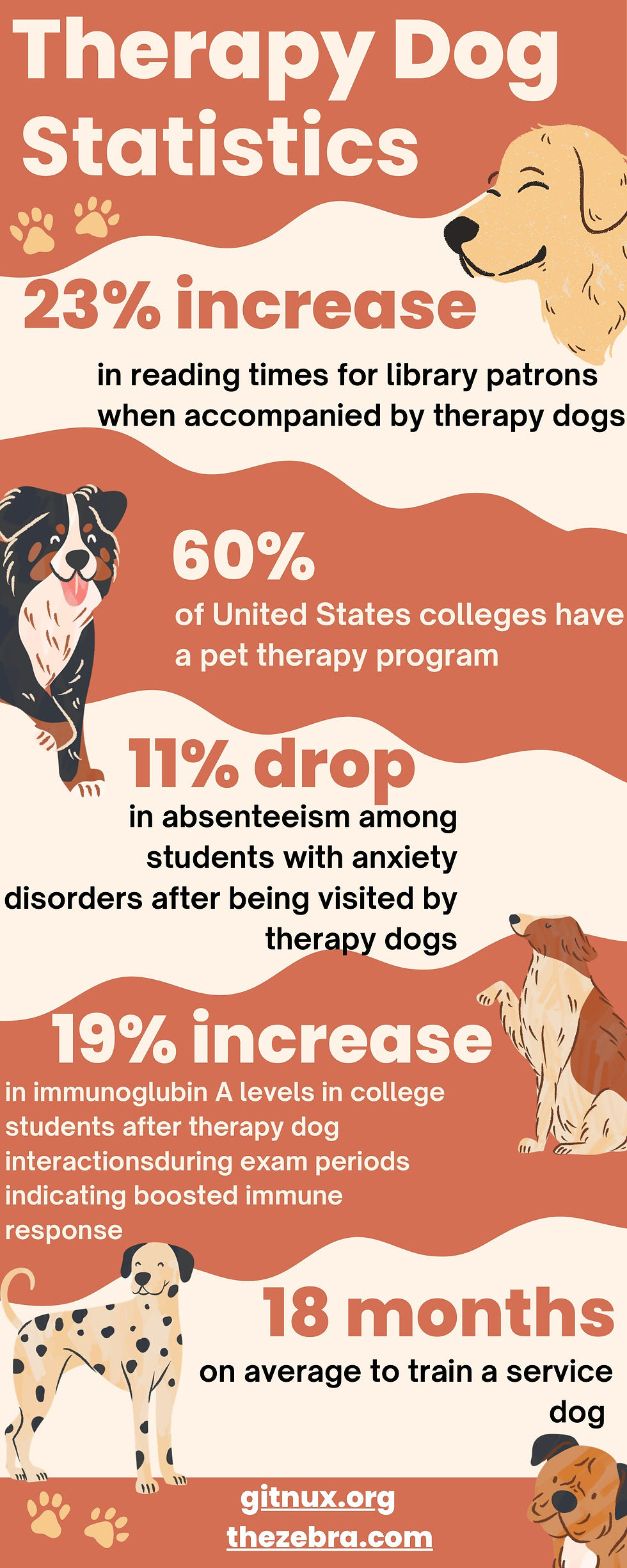
Riemer and other handlers visit Central Michigan University at the end of each month and during exam weeks. The dogs can be found at the Park Library and the Bovee University Center, where students can take a break from studying and de-stress by interacting with them. Programs like this are increasingly common, with about 60% of U.S. colleges offering pet therapy options for students.
One of Riemer’s dogs, Stella, is an 8-year-old field golden retriever rescued from an Amish puppy mill. Riemer trained her to become a certified therapy dog.

Stella appears at every therapy dog session and often becomes the center of attention. Her patience and cooperation with visitors stand out.
“All dogs should have jobs,” Riemer said. “And it’s true, I don’t care if they just respond to ‘sit’. that's a job.”
Some therapy dogs, including Stella, are My-Michigan Health dogs, Riemer said. They provide comfort and support to hospital patients. Research shows therapy dogs interactions can improve well-being, including boosting immune responses in college students during high-stress periods like exams.
Riemer said part of her work also includes training dogs at home. After the COVID-19 pandemic, many dogs experienced separation anxiety as owners returned to work, increasing the need for behavioral training.
Linxi Zhang, a computer science faculty member, brought her 3-year-old son, Jeffrey, to an April 23 therapy dog session at Park Library.
As Jeffrey interacted with the dogs, he laid on Stella and tapped her nose.
“Lots of dogs can seem friendly, and many are, but you never know what might irritate them,” Riemer said.

Because Stella is trained and understood she was interacting with a child, she handled the situation calmly. Dogs that are not properly trained or certified could cause accidents or scare others.
Senior students Ezra Sprague and Samantha Franklin said they try to attend therapy dog sessions every time they can.
“My life is the students and the dogs,” Riemer said.
Sprague said he has been attending therapy dog sessions for the past four years and that talking with the owners feels like family. The dogs have become an important part of this experience at CMU.

“Part of the therapy dogs isn’t just the dogs being calming and relaxing to decompress after studying,” Franklin said. “It also comes with a lot of people doing the same thing around you.”
Through proper training and certification, therapy dogs work to create a calm environment, offering
stress relief for students and the broader community.


Comments